Engine-derived ROI benchmarks for Las Vegas-area short-term rentals, single-family rentals, and small commercial properties. Numbers come from running real fixtures through the Cost Seg Smart engine, same engine that produces your actual study. Studies from $495.
Operated by Cost Seg Smart. Studies are IRS-aligned with engineer review included. 5 fixture benchmarks computed May 2026.
Numbers above are engine-estimated outputs from running 5 representative fixtures, not promises about what your specific property will produce. Results vary based on actual property condition, year built, renovation history, county assessor data quality, and rental treatment (STR vs LTR). Full per-fixture table, neighborhood breakdown, and downloadable CSV/PDF on the Las Vegas cost seg benchmarks page.
Las Vegas is the only major U.S. destination STR market where the buyer's home-state tax position is genuinely irrelevant. Nevada has no state individual income tax, and federal §168(k) at 100% under OBBBA produces the entire tax-savings calculation. A California-resident investor buying Las Vegas STR property gets the same Year-1 federal benefit as a Texas-resident or a New York-resident buyer, none of them face a Nevada-side addback because Nevada has no income tax to add back from. This is structurally different from a California buyer purchasing Big Bear (where California §168(k) decoupling applies) or a New York buyer purchasing Hudson Valley property (where state-side reconciliation applies).
Las Vegas runs unusual year-round STR demand sustained by three overlapping traffic patterns: convention traffic (Las Vegas Convention Center hosts 6M+ attendees annually), entertainment-anchored weekend leisure (the Strip, sports, residencies), and corporate-travel and conference traffic. Seasonal occupancy collapses are less pronounced than in single-season markets like ski resorts or beach destinations. The regulatory environment is permissive at the county level, Clark County operates a STR permit regime, City of Las Vegas has its own permits, City of Henderson has its own, all are generally permissive, though specific neighborhoods within Las Vegas proper face HOA-level restrictions.
Property archetype-wise, Las Vegas is master-planned-community-heavy. Summerlin (Las Vegas), Anthem and Green Valley (Henderson), Centennial Hills, and MacDonald Highlands all operate as planned communities with consistent newer-construction product (2000s–2010s), reasonable land allocations (18–28%), and active HOA structures. Engine reclassification ratios run 18–26% across the spread, with the highest ratios on master-planned community properties with substantial post-2015 STR-furnishing renovation.
Verify with your CPA. State tax conformity rules for federal §168(k) bonus depreciation are adjusted frequently, multiple states have modified their treatment two or more times in the past decade. The general framing on this page reflects our understanding as of May 2026, but you should always verify current-year treatment with a qualified CPA or tax attorney before relying on specific dollar projections for your situation.
These aren't rough estimates. Each fixture was run through the same engine that produces your actual study, RSMeans 2024 base costs, BLS PPI time index, county assessor land allocation, IRS Pub. 946 / Rev. Proc. 87-56 MACRS classification, 100% bonus depreciation per OBBBA.
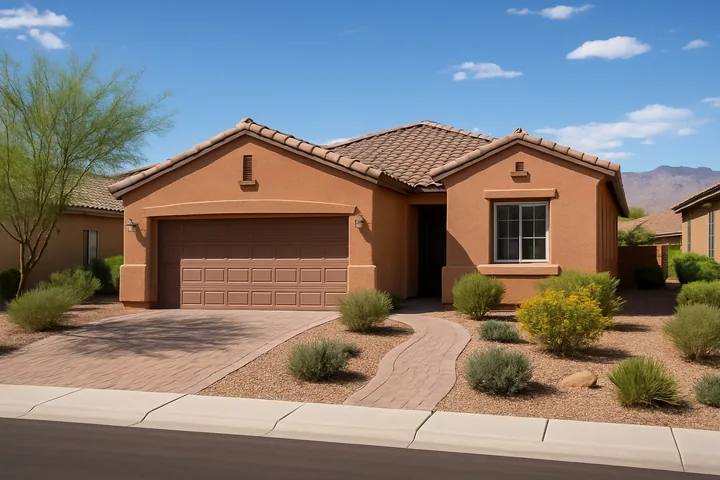
| Purchase price | $625,000 |
| Depreciable basis | $497,938 |
| Land allocation | 20.3% |
| 5-year reclassified | $101,180 |
| 15-year reclassified | $30,401 |
| Total reclass | 26.9% |
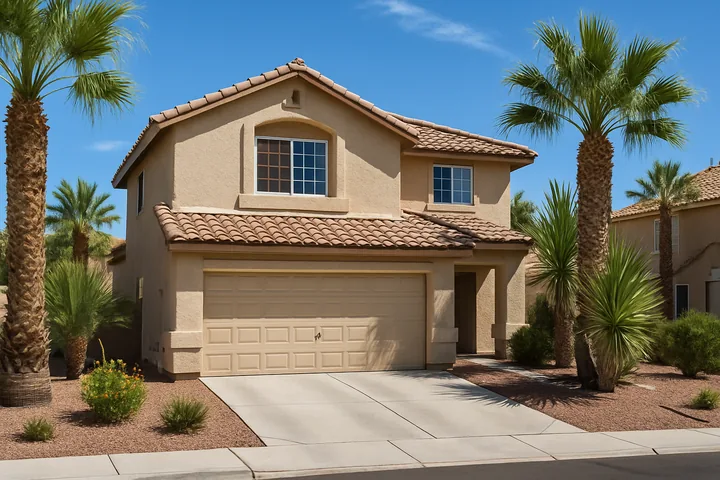
| Purchase price | $485,000 |
| Depreciable basis | $375,584 |
| Land allocation | 22.6% |
| 5-year reclassified | $67,479 |
| 15-year reclassified | $23,882 |
| Total reclass | 24.8% |
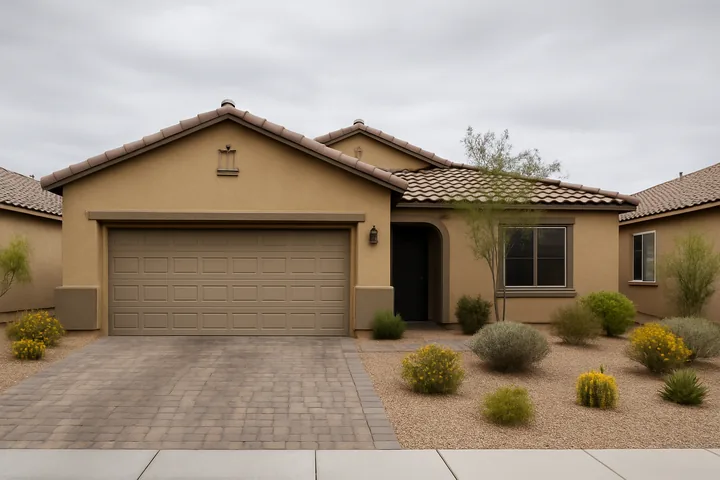
| Purchase price | $525,000 |
| Depreciable basis | $415,748 |
| Land allocation | 20.8% |
| 5-year reclassified | $75,715 |
| 15-year reclassified | $26,553 |
| Total reclass | 25.1% |
| Purchase price | $385,000 |
| Depreciable basis | $298,760 |
| Land allocation | 22.4% |
| 5-year reclassified | $30,575 |
| 15-year reclassified | $19,292 |
| Total reclass | 16.7% |
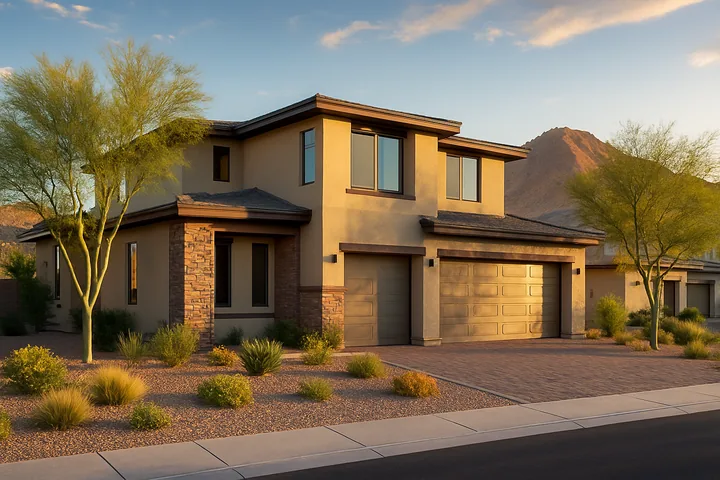
| Purchase price | $1,850,000 |
| Depreciable basis | $1,406,555 |
| Land allocation | 24.0% |
| 5-year reclassified | $286,113 |
| 15-year reclassified | $88,565 |
| Total reclass | 27.2% |
Cost-seg ROI varies more by neighborhood than by city. Las Vegas's 5 sub-markets each have their own land-allocation pattern and property archetype:
| Neighborhood | Typical value | Typical land allocation | Profile note |
|---|---|---|---|
| Summerlin (master-planned) | $625,000 | ~22% | Howard Hughes master-planned community west of Las Vegas Strip. Newer construction (2000s+) with cleaner reclassification ratios. Lower land allocation due to master-planned-community design. Strong year-round STR demand. |
| Henderson (Green Valley / Anthem) | $485,000 | ~20% | City of Henderson, separate jurisdiction from City of Las Vegas. Permissive STR regulation. Master-planned community SFR dominant. Lower land allocation, strong year-round LTR + STR rental cadence. |
| The Lakes / Spring Valley (Las Vegas) | $525,000 | ~24% | Established residential west Las Vegas. Mix of 1980s–2000s SFR and condo product. Mid-tier land allocation. Mix of LTR and STR with active fix-and-flip activity. |
| Centennial Hills / North Las Vegas (suburban) | $385,000 | ~18% | Lower-cost SFR rental market in northwest Las Vegas and adjacent North Las Vegas. Lowest land allocation. Strong BRRRR activity. Mix of LTR and emerging STR. |
| MacDonald Highlands / Lake Las Vegas (Henderson luxury) | $1,185,000 | ~28% | Luxury Henderson sub-markets, gated golf communities and Lake Las Vegas. Higher land allocation. Higher-end SFR and villa product. Active luxury STR market with HOA capital-assessment cadence. |
Methodology note: "Typical land allocation" reflects baseline patterns for the sub-market. For ultra-premium or resort-tier inventory where reconstruction cost exceeds 2.0× the implied depreciable basis after subtracting baseline land, the engine applies a premium land floor (~50%) to keep the study within audit-defensible territory. This means individual fixture engine output may exceed the neighborhood typical, especially for resort-tier ski-in/ski-out, beachfront, or view-premium product where land scarcity dominates value. See the /data/ page for per-fixture land-source attribution. Results vary substantially by specific property condition, renovation history, and assessor records.
Clark County, City of Las Vegas, and City of Henderson all operate distinct STR permit regimes, Clark County's is generally permissive in unincorporated areas, City of Las Vegas operates a permit system within city limits, and Henderson operates its own STR registration. STR-intent buyers should verify the property's jurisdiction (incorporation status varies by address across the Las Vegas Valley). HOA-level restrictions are the more common practical constraint, many Summerlin, Anthem, and Lake Las Vegas HOAs prohibit STR operation within their communities regardless of city or county allowance. Verify HOA covenants before underwriting STR-intent acquisitions. Material participation under §469 is achievable for self-managing operators given Las Vegas's mature property-management ecosystem; document hours contemporaneously. Most cost-seg-relevant Las Vegas property runs as either short-term rental (where allowed) or long-term rental, fix-and-flip activity is comparatively limited relative to Texas Sun Belt metros.
For the full IRS-rule reference layer (§168(k), §469 material participation, state conformity), see irsdepreciationrules.com, our open reference site.
Not for the Nevada-side math, there's no Nevada income tax to add back from, so California's §168(k) decoupling has nothing to interact with at the Nevada-property level. But the California-resident buyer still files a California return on their worldwide income, including Las Vegas rental income. Federal §168(k) at 100% bonus produces federal acceleration in Year 1 (real cash savings). California's decoupling means the California-side portion of the acceleration is deferred to the regular MACRS schedule, but that's a California-return phenomenon, not a Nevada one. Practically, for a CA-resident Las Vegas buyer in California's top 13.3% bracket, the federal Year-1 cash is real ($29,600 on $80K of accelerated reclass at 37% bracket) and California-side timing mismatch applies the same way it does for in-state California property. The Las Vegas property itself doesn't introduce any Nevada-specific complication.
Frequently yes. Many master-planned communities in Summerlin, Anthem, Green Valley, MacDonald Highlands, and Lake Las Vegas operate HOA covenants that prohibit short-term rental within their communities regardless of what Clark County, City of Las Vegas, or City of Henderson allow at the regulatory level. The HOA restriction is enforced by the HOA itself through CC&R compliance, and violation can produce fines, deed restrictions, or escalating enforcement. STR-intent buyers should verify HOA covenants, not just city/county regulations, before closing on any master-planned community property. The non-master-planned residential markets (older Spring Valley, parts of Centennial Hills, some Henderson neighborhoods outside the gated communities) typically don't have HOA STR restrictions but may have their own homeowner-association governance to verify.
Three overlapping demand patterns. (1) Convention traffic: Las Vegas Convention Center, Mandalay Bay, Sands Expo collectively host 6M+ convention attendees annually, with steady weekday demand spanning multiple sectors (technology, healthcare, construction, sports betting, electronics). (2) Entertainment-anchored weekend leisure: the Strip residency shows, sports events (Raiders, Golden Knights, Aces), MMA/boxing events, and major concert tours produce consistent weekend-leisure demand throughout the year. (3) Business-traveler corporate trips: shorter-duration corporate travel sustained by Las Vegas's position as a Western U.S. business hub. The result is that Las Vegas STR occupancy peaks aren't seasonal in the way that beach or ski markets are, there's no 6-month off-season collapse. This supports stronger hold-period modeling and more consistent operating economics around the cost-seg deduction.
Master-planned communities (Summerlin, Anthem, MacDonald Highlands, parts of Henderson) typically run 2000s+ construction with cleaner reclassification ratios, newer construction has higher 15-year land-improvement density (paving, hardscape, irrigation, landscaping infrastructure baked into the master-planned site) and higher 5-year FF&E density when furnished for STR. Engine output runs 22–28% reclassification on master-planned community STR product. Legacy 1980s–1990s Vegas SFR (parts of Spring Valley, older Henderson, Centennial Hills) runs 16–20% reclass because the original construction has lower land-improvement density and less new-build FF&E layer. For STR-intent buyers, master-planned communities typically produce better cost-seg ROI per dollar of basis, but verify HOA covenants first because many master-planned HOAs prohibit STR operation.
Mixed, depends on the property cohort. The legacy Spring Valley and older Henderson 1990s–2000s SFR stock has typically seen substantial post-2015 renovation including HVAC upgrades (Las Vegas's extreme heat drives frequent HVAC replacements), pool and outdoor-living additions (5/15-year work), full kitchen and bath remodels, and STR-furnishing packages. For these properties, the renovation pool can contribute 40–60% of the total accelerated component. The newer master-planned community product (Summerlin 2010s+, MacDonald Highlands 2010s+) typically doesn't have substantial post-purchase renovation history, the original construction is recent enough that renovation cost-seg is a smaller piece of the math. The engine treats renovation_cost as a separate allocable pool either way; the impact depends on whether the property has documented renovation cost to allocate.
More general cost-seg questions answered at costsegsmart.com/faq/.
Cost Seg Smart studies are IRS-aligned, engineering-reviewed, and include written audit defense. Pricing is transparent and starts at $495 for residential properties under $300K, full pricing on the main site.